
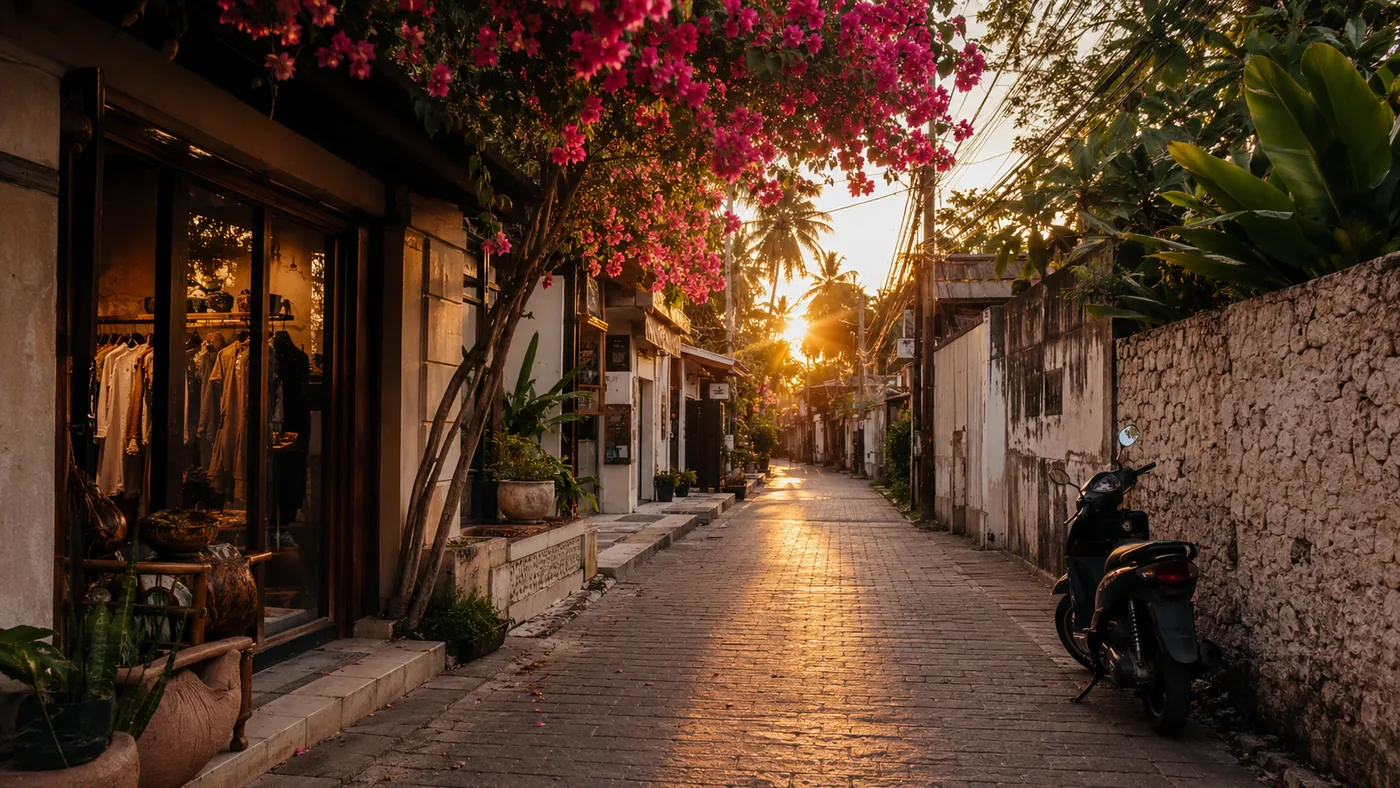
Seminyak divides opinion. For some, it represents everything that has gone wrong with Bali — the overdevelopment, the traffic, the relentless commercial energy. For others, it is the island's most cosmopolitan neighbourhood, a place where Indonesian creativity meets international ambition in ways that are genuinely exciting. The truth, as always, lies somewhere in between.
What is undeniable is that Seminyak has matured. The raucous beach-bar era has given way to something more considered, and for the visitor willing to look beyond the obvious, there is a neighbourhood of genuine character emerging from the noise.
Where to Stay
The accommodation landscape in Seminyak has shifted decisively towards the private villa. For groups and families, this is the most compelling way to experience the area — a walled compound with a pool, a garden, and the kind of indoor-outdoor living that Bali does better than anywhere on earth. The best properties achieve a balance of luxury and locality, with interiors that draw on Balinese craft traditions without tipping into theme-park pastiche.
Those after a walled estate in the Oberoi district will find that the neighbourhood's quieter residential streets — particularly those running parallel to Jalan Petitenget — offer properties that feel remarkably secluded given their proximity to the area's best restaurants and beaches. A good villa manager makes all the difference: the best ones will arrange everything from airport transfers to private chefs with a discretion that puts many five-star hotels to shame.
Where to Eat
Seminyak's dining scene is arguably the most diverse in Southeast Asia outside of Singapore. The Indonesian fine-dining movement has found its most confident expression here, with restaurants that reinterpret traditional recipes using contemporary techniques and presentation. The best of them manage to be both inventive and respectful — no small achievement when dealing with cuisines that carry deep cultural significance.
For breakfast, the neighbourhood's Australian-influenced cafe culture produces excellent results — flat whites and avocado toast are ubiquitous, but the better establishments also offer Balinese breakfast dishes that are far more interesting. Lunch is best taken at one of the beachfront warungs, where the food is simple but the setting — feet in the sand, surf breaking thirty metres away — elevates everything.
Where to Slow Down
The beach at sunset remains Seminyak's defining experience. The stretch between Petitenget and Batu Belig is wide enough to absorb the crowds, and the light in the hour before dark is extraordinary — a palette of amber and violet that explains why so many painters have settled on this island.
For quieter moments, the temple at Petitenget offers a pocket of calm amid the commercial activity. The small galleries and design studios along the back streets reward exploration, and several of the better spas offer treatments rooted in genuine Balinese healing traditions rather than the generic wellness menu that has colonised the global hotel industry.
The neighbourhood rewards a certain amount of local geography. The strip along Jalan Kayu Aya - the Oberoi, as everyone still calls it - is where the restaurants and boutiques concentrate, and it is genuinely walkable in a way most of southern Bali is not. Push north toward Petitenget and the pace drops noticeably: the beach widens, the temple sits at the end of it, and the fishing boats are still pulled up on the sand at dawn. Push south and you are into Legian and the older, louder Bali the neighbourhood is usually accused of being.
Eating well here is easy and getting expensive, which makes the choosing worth some thought. The internationally famous places are good and priced accordingly; the more interesting meals tend to be one street back, in the smaller rooms with shorter menus and a chef who is actually present. Book the celebrated ones a week out if you want them, eat early at the rest, and keep at least two evenings for warungs - the gap in quality is far narrower than the gap in price.
Where you sleep shapes the trip more than any restaurant will. The hotels along the beach road buy you sunsets and a short walk to dinner; the villas set back in the lanes buy you space, quiet and usually a pool. For couples the hotels generally win on convenience. For groups the arithmetic reverses quickly - somewhere with its own kitchen, a long table and staff who can cook is both cheaper per head and considerably more sociable than four rooms and a series of restaurant bookings.
That is the version of Seminyak most visitors miss, and it is the one worth planning for. A house rather than a room, a cook rather than a concierge, breakfast that happens whenever people surface. The families and reunions who work this out tend to settle on a walled estate in the Oberoi district or something like it - close enough to walk to dinner, far enough back that the road is inaudible, and large enough that everyone can be together without being on top of one another.
Slowing down, in the end, is mostly a matter of doing less. Seminyak is small; the temptation is to fill a week with the whole of southern Bali and spend half of it in a car. The better version is to stay put, walk the same stretch of beach at six each morning before the heat, keep one long lunch a day, and accept that the afternoon belongs to the shade. Done that way it is a very pleasant place indeed, and the criticisms of it start to sound like they are describing somewhere else.
Seminyak will never be the quiet Bali of thirty years ago. But it has found a new identity — sophisticated, creative, and, in its best moments, genuinely stylish. The key is knowing where to look.