The road north from Denpasar climbs through terraced rice fields and clove plantations before the air begins to cool and the landscape shifts from tropical lushness to something closer to the Scottish Highlands — if the Highlands had volcanic lakes and Hindu temples. This is Bali's interior, and it is another world entirely from the beach clubs of the south.
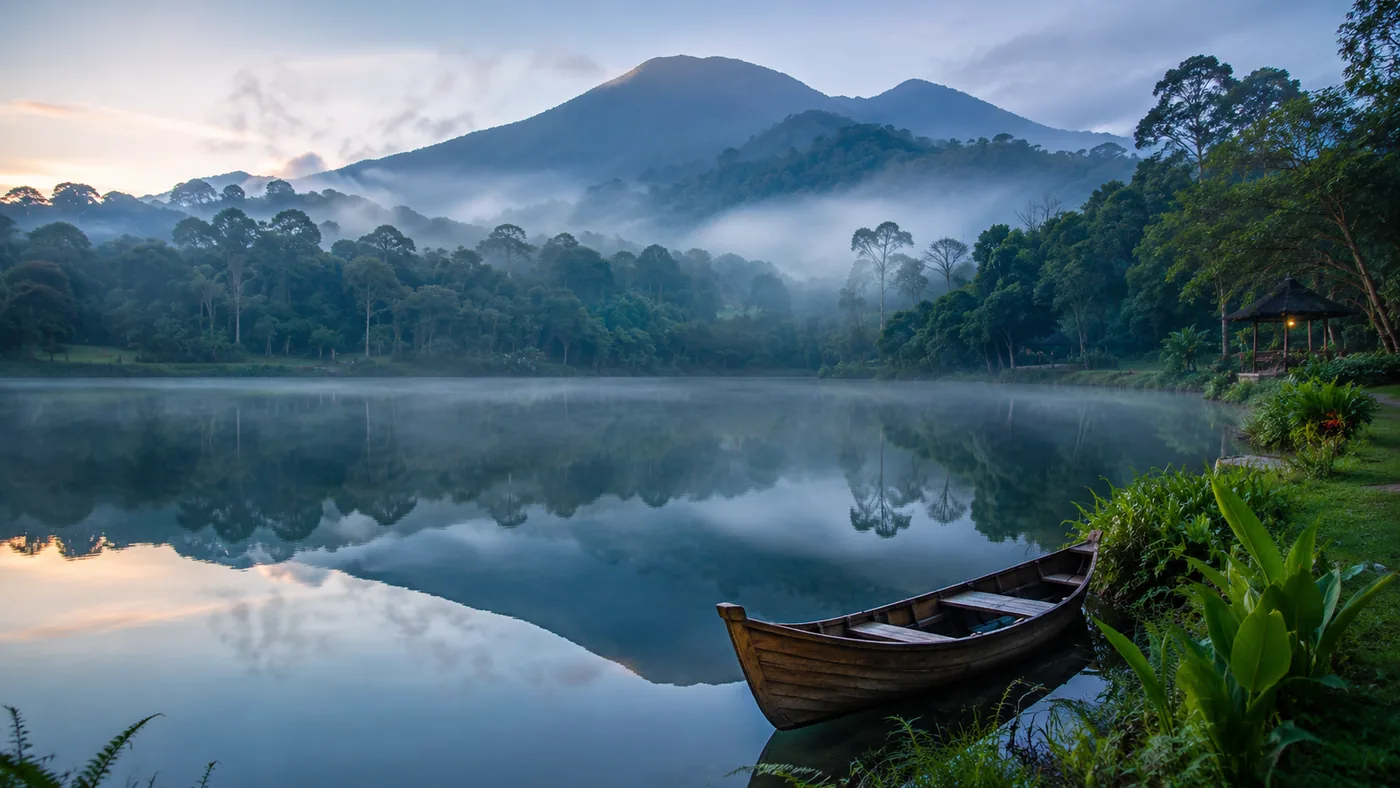
Munduk and Bedugul sit in the central highlands at elevations between 1,200 and 1,500 metres. The temperature drops noticeably. Mist gathers in the valleys at dawn. The pace of life slows to something that even the most committed slow-culture advocate would find satisfying.
Munduk: The Village That Time Improved
Munduk was a Dutch colonial hill station, and traces of that era survive in the architecture: broad verandahs, pitched roofs, a certain orderliness in the village layout. But what draws visitors today is the landscape. Waterfalls cascade through jungle ravines within walking distance of the village. Coffee and clove plantations cover the surrounding hills, and the air carries a spiced sweetness that no candle manufacturer has successfully replicated.
Accommodation ranges from simple homestays to a handful of elegant boutique properties that have been designed with genuine sensitivity to the landscape. The best of them frame views of the twin lakes — Buyan and Tamblingan — through floor-to-ceiling windows, creating the impression of floating above the crater.
Bedugul: Sacred Water and Botanical Quiet
Bedugul is centred on Lake Bratan, home to the iconic Pura Ulun Danu Bratan — the water temple that appears on the 50,000-rupiah note. It is one of Bali's most photographed sites, yet in the early morning, before the tour buses arrive, it retains a genuine atmosphere of spiritual calm. The temple appears to float on the lake's surface, its multi-tiered meru towers reflected in water that is almost supernaturally still.
The Bali Botanic Garden, just above the lake, is one of the island's most underappreciated treasures. Established in 1959, it covers 157 hectares of mountain slope and contains over 2,000 species of plants, including an extraordinary orchid collection. On a weekday morning, you may have entire sections to yourself — a rare luxury on an island that receives millions of visitors each year.
Practical Matters
The highlands are best reached by private car. The drive from the airport takes approximately two and a half hours, though the road is winding enough to make this an optimistic estimate. Bring a light jacket — evenings are genuinely cool, and the contrast with the coastal heat is part of the pleasure.
Dining options are limited but improving. Several coffee plantations now offer tastings and light meals, and the local speciality — a simple plate of nasi campur served with views of volcanic peaks — is a reminder that the best meals are often the least complicated.
The temperature shift is the first thing that registers, and it reorganises the whole trip. By the time you are above a thousand metres the humidity has gone, the evenings genuinely require a layer, and sleeping without air conditioning stops being an act of endurance. Anyone who has spent a week in the south will recognise the particular relief of it. The highlands are not a cooler version of coastal Bali so much as a different climate wearing the same island.
Munduk earns its reputation slowly. There is no single sight that justifies the drive; what there is instead is a long ridge of coffee and clove smallholdings, a scattering of waterfalls reached by genuinely steep paths, and a valley that fills with cloud most afternoons and empties again by evening. The village itself is modest. The pleasure is in walking out of it early, following an irrigation channel between plots, and finding that you have not seen another visitor in two hours.
Bedugul, twenty minutes away, is busier and more photographed, largely on account of Ulun Danu Beratan sitting picturesquely on the water. Go at seven and you will have the lake shore to yourself; go at eleven and you will share it with several coach parties. The botanic garden next door is the underrated stop - two hundred hectares of orchids, ferns and enormous fig trees, almost always quiet, and a reminder that this part of the island was a colonial hill station long before it was a photo opportunity.
Where to stay divides fairly cleanly. The coffee-estate guesthouses around Munduk are simple, family-run and often perched on the edge of something spectacular; expect hot water, a good breakfast and no particular luxury. The handful of properly designed retreats above the lakes offer heated pools, proper cooking and the sort of quiet that costs money. Both are pleasant. What neither offers is nightlife, and travellers who need some should treat the highlands as two nights rather than a week.
The practical advice is dull but worth heeding. The roads are narrow, steep and frequently wet, and journey times bear no relation to distance - allow three hours from Seminyak rather than the two the map promises. Afternoon rain is close to a daily fixture even outside the wet season, so plan walking for the morning. And bring proper shoes; the waterfall paths are mud and root, not the paved stairways the photographs imply.
The highlands are not for everyone. There are no beach bars, no surf breaks, no nightlife to speak of. But for those willing to trade the familiar Bali for something quieter, cooler, and immeasurably more peaceful, Munduk and Bedugul offer exactly what the island's name once promised: a place apart.