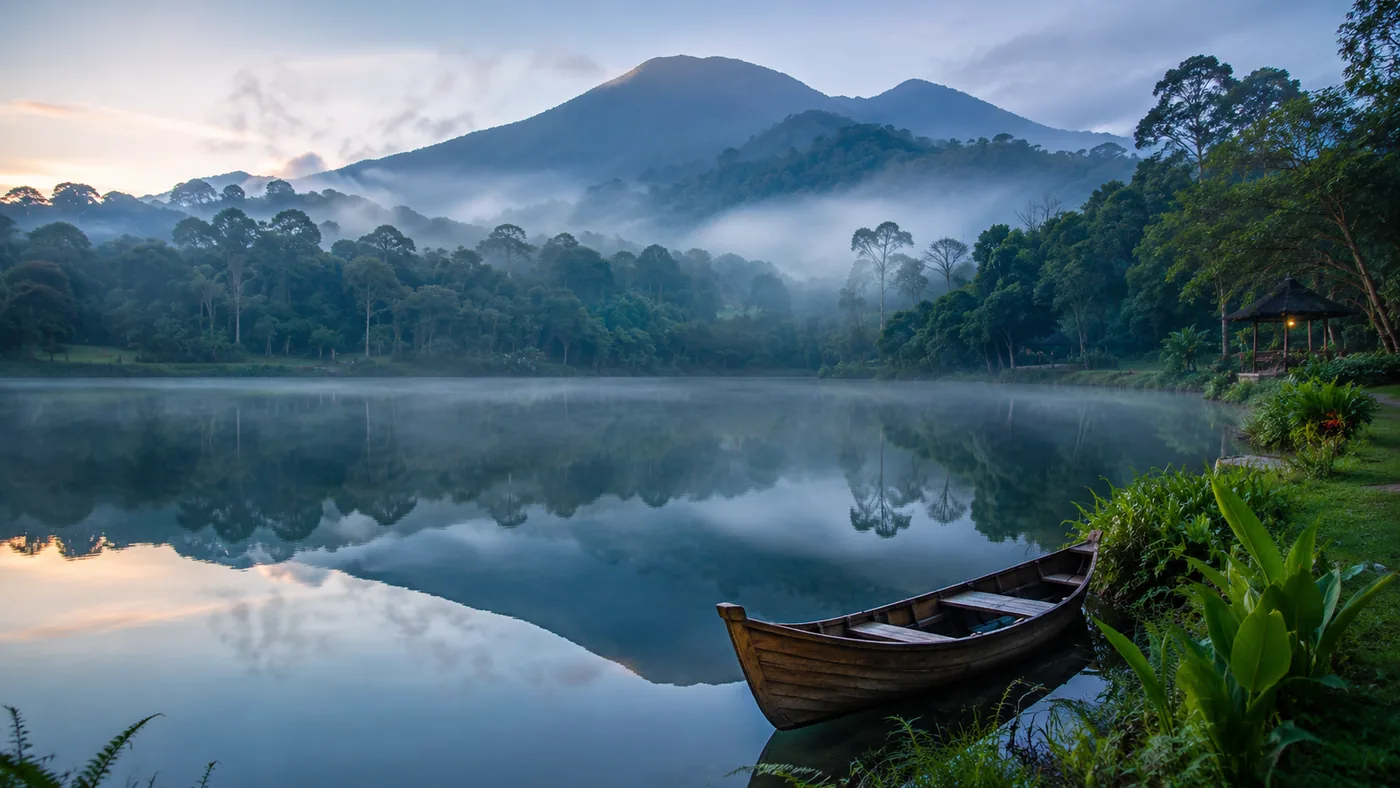
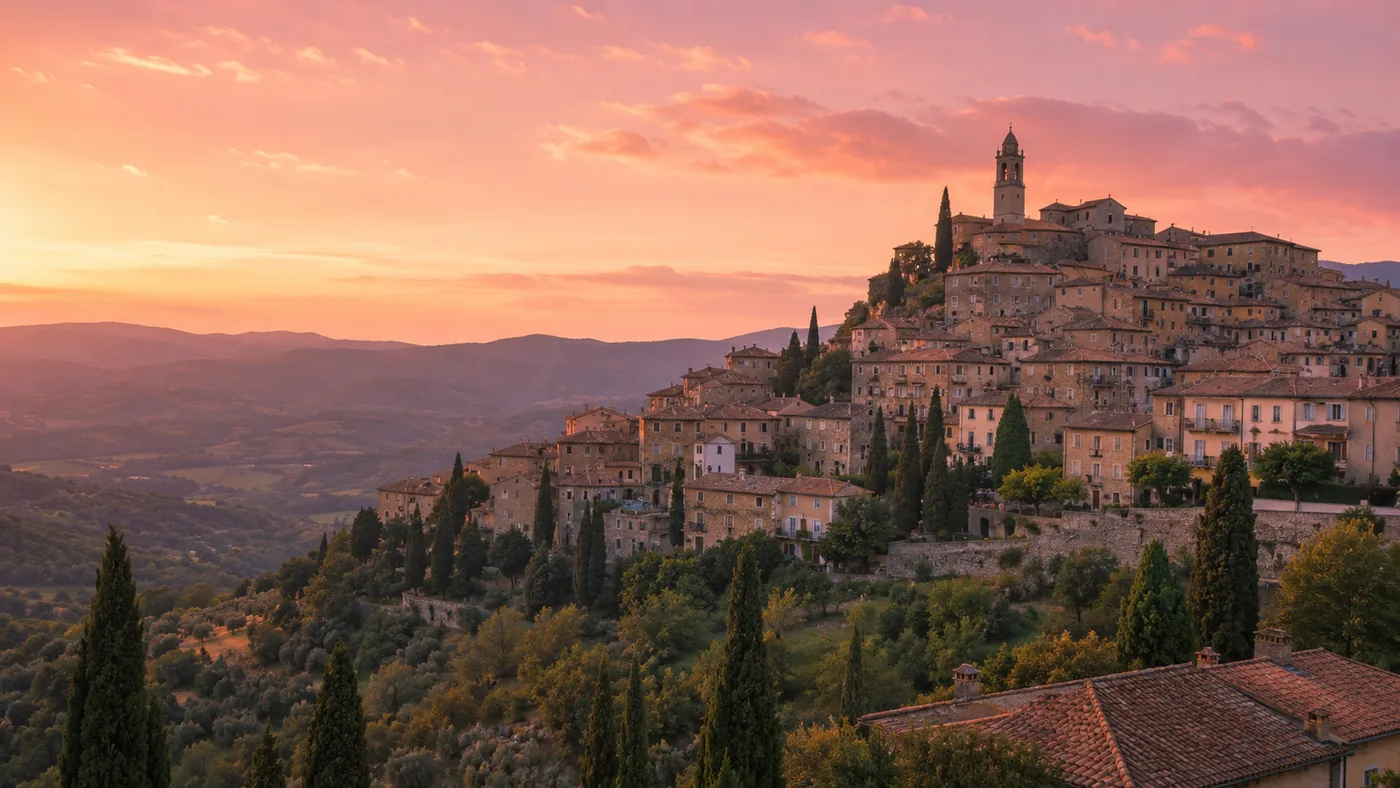
The hill town is one of civilisation's most enduring archetypes. Long before the invention of air conditioning or the package holiday, human settlements sought out elevated ground for reasons that were at once practical and symbolic. The hill offered defence, cooler temperatures, and something less tangible but equally important: perspective. To look down from a height is to see the world differently, and the cultures that have flourished on hilltops have always understood this.
The Mediterranean Model
The hill towns of central Italy remain the most celebrated examples of the form. San Gimignano, Orvieto, Montepulciano — each grew from a defensive logic that produced, almost accidentally, some of the most beautiful urban landscapes in the world. The narrow streets, the buildings that seem to grow from the rock itself, the piazzas that open unexpectedly onto vast views — these were not designed for aesthetic pleasure. They emerged from the constraints of building on a summit where every metre of flat ground was precious.
Yet the result was a form of urbanism that planners and architects still study. The hill town is inherently walkable. Its density creates a richness of social encounter that suburban sprawl cannot replicate. Its vertical topography produces a constant drama of ascent and descent, of hidden corners and sudden panoramas. The Tuscan hill town is, in many ways, the anti-suburb — compact where the suburb is diffuse, vertical where it is horizontal, communal where it is private.
The Colonial Hill Station
The British Empire created its own version of the hill town: the hill station. Simla, Darjeeling, Nuwara Eliya, Cameron Highlands — these were settlements born of colonial discomfort with tropical heat and a desire to recreate, at altitude, something resembling the English countryside. The results were fascinating hybrids: Tudor-style bungalows perched on Himalayan ridges, cricket pitches cut into Malaysian jungle, Anglican churches commanding views of tea plantations that stretched to the horizon.
The hill station served a dual function. Practically, it provided relief from the heat of the plains during the hottest months. Symbolically, it reinforced the colonial hierarchy — those who could afford to retreat to the hills demonstrated their status through the very act of withdrawal. The hill station was, in this sense, a physical manifestation of privilege: elevation as social metaphor.
The Hill Town Today
The contemporary hill town faces a different set of pressures. Tourism has transformed many of the most famous examples — Santorini, Positano, Ubud — into destinations that bear only a passing resemblance to the working communities they once were. The challenge is to preserve what makes the hill town distinctive — its scale, its relationship to landscape, its sense of remove — while accommodating the economic realities of the twenty-first century.
Some are succeeding. In Portugal, villages in the Serra da Estrela are being carefully restored as centres for rural tourism and artisanal production. In Japan, mountain onsen towns maintain their character through strict planning controls and a cultural commitment to tradition. In Bali, the highland villages around Munduk and Kintamani remain relatively untouched by the development that has transformed the southern coast.
Elevation as Philosophy
There is something about altitude that encourages reflection. The thin air, the long views, the physical separation from the plains below — these create conditions that have been associated with contemplation across cultures and centuries. Monasteries seek out mountaintops. Writers retreat to hill country. Philosophers from Nietzsche to Wittgenstein did their best thinking at altitude.
Defence explains the earliest examples and almost none of the later ones. A settlement on high ground sees an enemy coming and forces them to arrive tired; that logic built the hill towns of Umbria and Tuscany and a thousand others besides. But the walls came down or became decorative centuries ago, and the towns did not empty. Something else was keeping people there, and it is worth being precise about what.
Climate is the honest answer for a great many of them. Height buys a temperature drop of roughly six degrees per thousand metres, and in hot regions that is the difference between a place you endure and a place you live. The colonial hill stations of India, Malaya and Java were built on exactly this arithmetic - Simla, Cameron Highlands, Bandung - and their architecture, all pitched roofs and fireplaces and clipped lawns, is a slightly comic monument to how badly their builders wanted somewhere temperate.
The social history is less comfortable and worth acknowledging. Those hill stations were segregated retreats, built so that an administrative class could escape a climate and a population it found trying, and staffed by people who did not get to leave when the season ended. That the resulting towns are often charming does not cancel what they were for. The better ones today are those that have been thoroughly reclaimed by the places around them rather than preserved as period pieces.
What survives across all of them is a distinctive spatial character, and it comes from the constraint. Building on a slope makes streets narrow and crooked, squeezes squares into whatever flat ground exists, stacks houses so that one roof is another's terrace, and puts a view at the end of half the streets by accident. Nobody designed that; gravity did. It is why hill towns are so consistently pleasant to walk and so nearly impossible to imitate on flat land.
The contemporary version is the mountain town remade by people who can work anywhere, and the pattern is old enough to predict. Cool air, cheaper space and a view draw incomers; incomers push up prices; the families who farmed the terraces sell up or move down the hill. Whether a hill town stays a place or becomes a set depends almost entirely on whether the ordinary business of living there - a school, a doctor, a shop selling things residents need - survives the transition.
The hill town, then, is more than a settlement type. It is an idea about the good life — one that values perspective over proximity, quality over quantity, the considered over the convenient. In a world that seems increasingly determined to flatten every landscape into a single, connected plane, the hill town stands as a reminder that sometimes the best view requires a climb.