
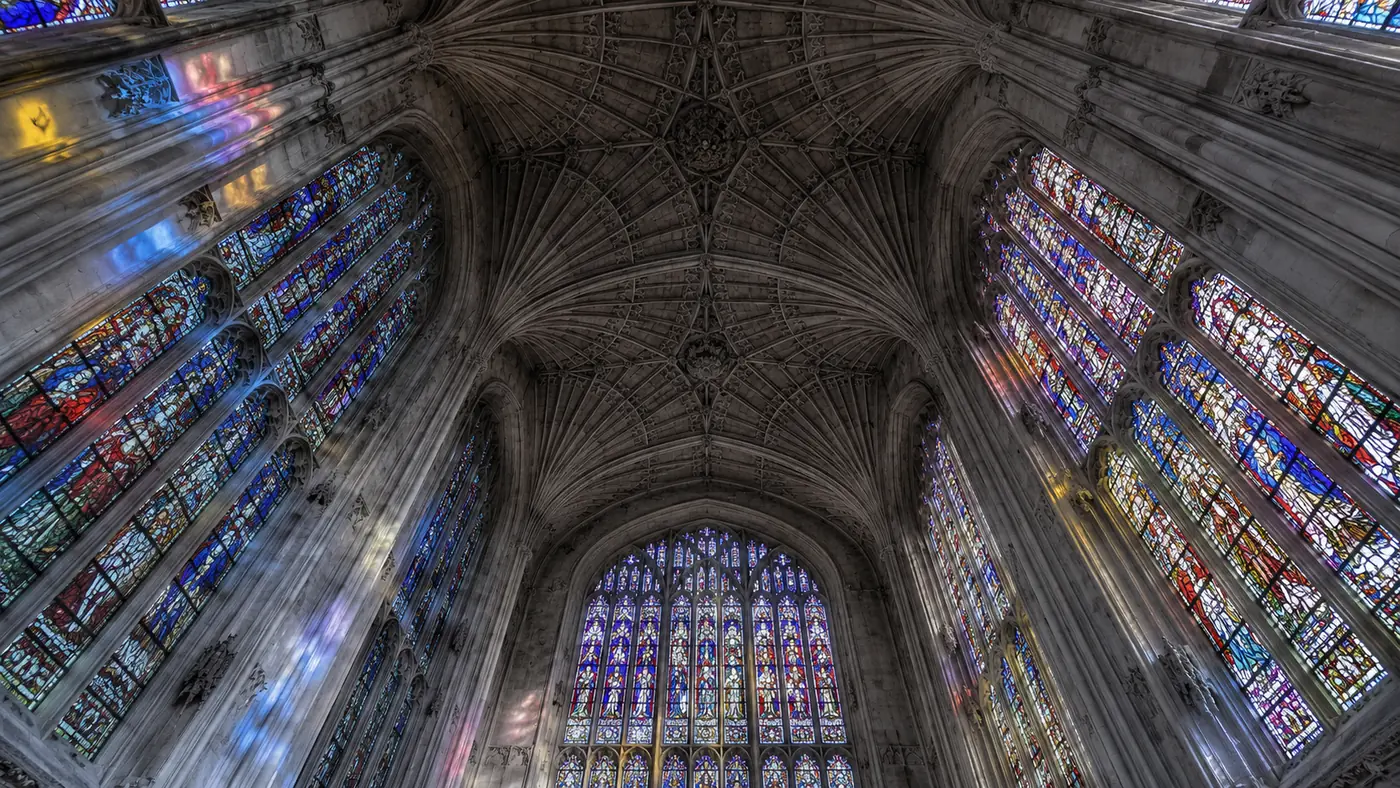
I arrived at Cambridge with the confidence of someone who had read widely but looked at very little. I knew the canon — or thought I did — but my eye was entirely uneducated. It was the buildings that began to change this. Not the famous ones, not King's College Chapel or the Wren Library, but the incidental details: a doorway in Pembroke, a staircase in Peterhouse, the way afternoon light fell through a window in the English Faculty library.
Taste, I came to understand, is not a fixed quality that one either possesses or lacks. It is a practice — a habit of attention that develops through sustained exposure to things made with care.
The Education of the Eye
Cambridge teaches taste almost by accident. The daily walk from college to lecture hall is a passage through centuries of architectural decision-making, each building a record of what a particular era considered beautiful, appropriate, or worthy of stone. You learn to notice proportions before you learn the word for them. You develop preferences before you can articulate why.
The Fitzwilliam Museum played its part. Not in the blockbuster-exhibition sense — Cambridge rarely does spectacle — but in the quiet accumulation of visits. I returned to the same Poussin landscape perhaps thirty times over three years. Each visit revealed something the previous one had concealed. This, I later recognised, was the foundation of taste: not the breadth of one's references but the depth of one's looking.
Against the Algorithmic Palate
What makes the Cambridge education in taste distinctive is its inefficiency. There is no shortcut to understanding why one typeface works and another does not, why a particular shade of green feels right on a library wall, why some furniture endures and other pieces merely occupy space. These judgements are formed slowly, through a kind of aesthetic apprenticeship that cannot be compressed into a listicle or a mood board.
The algorithmic age threatens this process at its root. When taste is determined by what others have liked, the personal dimension — the eccentricity, the individual history of looking — is flattened into consensus. The result is a world of beautifully curated sameness.
Taste as Ethics
There is an ethical dimension to taste that is rarely discussed. To choose well — in what we read, what we build, what we wear, how we furnish our homes — is to take responsibility for the quality of our surroundings. It is a form of care that extends beyond the self.
John Ruskin understood this. His lectures at Oxford argued that the health of a society could be read in the quality of its buildings. Cambridge, for all its privilege and insularity, embodies this principle. The care taken with a college garden, the choice of stone for a new building, the binding of books in the university library — these are not vanities. They are expressions of a culture that believes the made environment matters.
What changed, in the end, was not the reading but the looking. Supervisions had a way of exposing the difference. You could arrive with a confident thesis about a painting and be asked, quite gently, what was actually happening in the bottom left corner, and discover you had no idea because you had never really looked. The humiliation was useful. It taught me that taste is not a stock of opinions to be deployed but a habit of attention to be practised, and that the practice is slow and mostly unglamorous.
The city itself did a good deal of the teaching. Cambridge is an unusually legible place architecturally: you can walk from a Norman round church to a Wren library to a brutalist history faculty in twenty minutes, and the argument between them is right there in the brick and the concrete. Nobody sat me down and explained proportion, but after three years of crossing the same courts at the same hours in changing light, something about scale and repose had lodged itself without my noticing.
There were counter-lessons too, and they mattered as much. Cambridge is perfectly capable of producing a very confident sort of philistine, someone who has learned the vocabulary of discernment without any of the underlying pleasure. You met them at dinner: fluent, unenthusiastic, quick to place a thing and slow to enjoy it. It was a useful warning. Taste that exists mainly to be displayed curdles quickly into snobbery, and snobbery is the opposite of an eye - it is a way of not having to look at all.
The most durable habit I took away was the willingness to be bored in front of something. Most of what is worth seeing does not announce itself in the first thirty seconds, and the modern reflex is to move on well before that. Sitting with a painting, or a building, or a piece of music for longer than is comfortable is where the actual noticing happens. It is a small discipline and almost everything else follows from it.
I have since come to think this transfers well beyond the arts. The same faculty that lets you see why one room feels calm and another agitated is the one that tells you a menu is trying too hard, or that a hotel has been designed for photographs rather than for people. It is not sophistication in the social sense. It is closer to a kind of honesty - the refusal to say a thing is good because you are supposed to, or bad because it is popular.
Good taste, then, is not about exclusion. It is about the willingness to look carefully, to choose deliberately, and to accept that discernment is a skill worth cultivating — even when the world seems determined to make it redundant.